Men & Women
A candid exploration of hypergamy, relational aggression, and the forces shaping modern gender roles.


The Confusion of Modern Love
In today’s rapidly changing world, relationships feel more fragile and perplexing than ever. This article delves into the complexities of modern love, exploring how societal shifts and evolving gender dynamics have reshaped our understanding of love, trust, and partnership. From the impact of technology to the biological underpinnings of our behaviour, we’ll explore what went wrong and how we can move forward.
While some argue that modern society has disrupted the natural interplay between men and women, others see these changes as a necessary evolution towards greater equality and understanding. Exploring both perspectives is crucial to foster a more nuanced dialogue.
The destabilization of traditional gender roles was not spontaneous. It was driven by deliberate political, ideological, and technological choices that disregarded millennia of social wisdom about love, trust, and maturity.
The Gender Divide
Understanding Love and Conflict Through Difference
Men and women approach love and conflict from different perspectives—shaped by biology, psychology, and societal expectations. These differences offer unique strengths that can complement each other in relationships and society.
Friedrich Nietzsche captured the essence of this divide in Beyond Good and Evil: “In revenge and in love, woman is more barbarous than man.” His observation reflects how women and men channel their emotions differently—women through relational dynamics, men through action. Similarly, Margaret Atwood’s famous remark, “Men are afraid that women will laugh at them. Women are afraid that men will kill them,” underscores a deeper truth: men’s evolutionary role as protectors makes them vulnerable to humiliation, while women’s physical vulnerability necessitates a focus on security.
These contrasting fears are neither arbitrary nor inherently antagonistic. They form a natural balance—one that modern society has disrupted by dismissing gendered differences as relics of the past. This has created a culture where men and women are often seen as adversaries rather than collaborators and co-creators.
Weaponising Differences
Instead of embracing the complementary nature of gender roles, society has weaponized them. Men are often criticized for aggression, stoicism, and ambition, while women’s relational strategies—emotional influence, exclusion, and social manipulation—are celebrated or ignored. This asymmetry fuels resentment and alienation between the genders, as both feel misunderstood and undervalued.
In a functional society, these differences would work in harmony. Men’s risk-taking would balance women’s caution; women’s relational acuity would temper men’s directness. Instead, ideological movements have turned these strengths into weaknesses, framing natural instincts as societal problems. The result is a fractured understanding of love, partnership, and equality.
What We're Really Arguing About
Most Arguments Are About Definitions
At the heart of gender conflict lies a battle over values. Men and women prioritize different things—men often lean toward risk-taking and independence, while women value security and connection. These priorities, rooted in biology, are frequently misinterpreted as selfishness or malice.
This is where Most arguments are about definitions applies. Men and women approach life from distinct perspectives, shaped by evolutionary pressures. Conflict arises when these perspectives clash without recognition of their underlying logic. Instead of complementing each other, men and women find themselves locked in a zero-sum game.
Hypergamy and the Modern Dating Market
The Clash Between Instinct and Ideals
One of the most misunderstood—and often controversial—realities in modern relationships is hypergamy: the instinctual drive for women to seek partners who offer the best combination of genetic fitness, status, and resources. This behaviour, rooted in evolutionary biology, historically ensured survival by securing protection and provision for women and their offspring. However, in today’s world, hypergamy is a source of cultural tension as it collides with modern ideals of equality and fairness.
For most of human history, monogamy served as a stabilizing force, curbing the social chaos often associated with polygamy. Monogamy created a system that aligned long-term bonding with reproductive success, balancing the two primary sexual strategies: seeking genetic fitness and ensuring stable provisioning. However, as society has moved toward greater individual freedom, the traditional structures—religious, social, and legal—that reinforced monogamy have eroded in the name of equality and autonomy.
This shift incentivizes women to lean more heavily on their second sexual strategy: prioritizing genetic fitness over long-term bonds. The result is a two-tier sexual marketplace, where a small group of highly desirable men monopolize much of the attention, leaving the majority of men sidelined. This dynamic fuels hostility and confusion, creating tension in both genders as expectations and outcomes increasingly diverge. Historically speaking, large pools of frustrated, unaccounted for men, are the fuel of violent unrest, revolution, and civil war.
Modern dating now operates with two opposing forces: the biological instincts that have guided human behaviour for millennia and the societal expectations that these instincts can—or should—be ignored. The resulting friction has created a dating market rife with contradictions and unmet expectations.
Hypergamy in Today’s Culture
Hypergamous behaviour manifests in several ways across modern culture, often sparking debate about fairness, autonomy, and the nature of relationships:
The Age-Gap Paradox: Age-gap relationships, such as Leonardo DiCaprio dating younger women, are relentlessly criticized as predatory and yet strangely persist. This persistence is rooted in hypergamous preferences—women often seek older, higher-status men who can offer security. Rather than coercion, these dynamics reflect individual choice shaped by evolutionary instincts. However, the media and social narrative frames such relationships as exploitative, ignoring the role of mutual consent.
Successful Women and Shrinking Dating Pools: As women achieve unprecedented success in education and careers, they increasingly struggle to find partners who meet or exceed their expectations. This tension stems from hypergamous instincts clashing with a smaller pool of high-status men. Society tends to frame this as a “lack of good men,” but the issue lies in the biological realities of mate selection.
The Sugar Dating Dilemma: The rise of sugar dating, where relationships explicitly involve an exchange of resources, illustrates hypergamous behaviour in its rawest form. While often criticized for its transactional nature, sugar dating reflects deeper instincts: women seeking provision and men offering resources, roles embedded in human history.
Divorce Trends: In the West, women initiate around 70% of divorces. Legal systems overwhelmingly favour women in matters of child support and alimony, further highlighting hypergamy’s role in modern relationships. Dissatisfaction and unmet expectations often drive these divorces, with the number one predictor being a man losing his job. This underscores a societal failure to balance hypergamous instincts with stable partnerships.
Failures of Female-Only Dynamics: Attempts to create female-only gyms, nightclubs, and social spaces often highlight the limitations of relational strategies without complementary male dynamics. The lack of external structure or competition—traits associated with masculinity—often leads to rapid declines in interest or sustainability.
Cultural Examples:
Netflix’s Sex/Life offers a striking portrayal of hypergamy. The protagonist’s inability to emotionally and sexually detach from a past lover reflects hypergamous preferences for men who set a high standard in fulfilling emotional and physical needs. This demonstrates how hypergamy is not just about seeking the best partner but often prioritizing past connections that defined a woman’s expectations, if you set her bar, you become the bar. When these expectations go unmet in new relationships, dissatisfaction can arise.
The Will Smith Oscar Slap: The 2022 Oscars incident highlights hypergamous dynamics and their emotional toll. Jada Pinkett Smith’s bond with Tupac Shakur—a dominant, charismatic figure—casts a long shadow over her marriage to Will Smith. Jada’s public admiration for Tupac has framed him as an unparalleled ideal, leaving Will competing with both the memory and an idealized version of Tupac. This impossible standard adds to the hypergamous tension in their relationship. The slap can be interpreted as Will’s attempt to reassert dominance in a situation where he felt overshadowed. I think its worth noting that Pickup Artists refer to women pair-bonded with a previous partner as alpha widows.
These examples highlight a recurring theme: while hypergamy once aligned with societal norms and structures like monogamy, modern ideologies advocating for equality have created tension between biological instincts and cultural expectations of fairness.
Pandora’s Box: A Metaphor for Hypergamy
The myth of Pandora’s Box offers a compelling metaphor for the consequences of unrestrained sexual dynamics—especially hypergamy. In the myth, Pandora unleashes chaos into the world by opening a forbidden box, leaving only hope trapped inside. This story reflects the tension between open hypergamy (unchecked sexual exploration) and closed hypergamy (stabilized pair-bonding and traditional sexual roles).
The Role of Technology and Modern Media
How Digital Tools Distort Love, Connection, and Reality
Modern technology—particularly dating apps, social media, and algorithm-driven content—has radically altered human relationships. While these tools offer convenience, they often exploit human psychology, deepening the gender divide, weakening social bonds, and distorting perceptions of reality.
The Dating App Paradox
Dating apps like Tinder use algorithms such as the ELO system, originally used in competitive chess, to assign users a 'score' based on desirability and swiping behavior. This system prioritizes high-value matches, creating a winner-takes-all dynamic where a small percentage of men receive the majority of female attention. Average women, facing an illusion of abundant options, unknowingly compete for the same small pool of men. Meanwhile, most men receive little to no engagement, creating frustration and resentment. These dynamics amplify hypergamous instincts while leaving men and women dissatisfied. Women often misinterpret sexual attention from top-tier men as long-term interest, while men experience unprecedented levels of loneliness and rejection.
For instance, in the United States, where this ideology has infiltrated deep, a Pew Research Center report indicates that among single adults aged 18 to 29, 32% of women and 51% of men are single. They’re either unknowingly dating taken men, they don’t care, or don’t have better alternatives. This aligns with similar research from the States that found Women are twice as likely as men to say dating is harder than 10 years ago because its riskier now. They sought freedom. With freedom comes responsibility. With responsibility comes choice. And with choice comes the possibility of making bad decisions, which can be deeply unsettling for many.
The Collapse of Communities
Social media promised connection but delivered isolation. The rise of digital interaction has coincided with a sharp decline in friend group sizes and meaningful, in-person connections. The World Health Organization has declared a loneliness epidemic, affecting both genders but particularly young men. Siloed social media feeds amplify divisive narratives, polarizing communities and eroding shared cultural norms. Where friendships and extended families once buffered emotional or relational strife, today’s atomized individuals face their struggles alone, seeking validation or escape through digital tools. It’s a similar story around the globe, see Bowling Alone: The Collapse and Revival of American Community.
Media and Institutional Bias
Technology has also accelerated the ideological capture of modern institutions, with media narratives and elite academia increasingly favoring left-leaning, gynocentric perspectives. Research by the National Association of Scholars highlights the overwhelming political homogeneity in elite liberal arts colleges, with conservative or moderate viewpoints nearly erased.
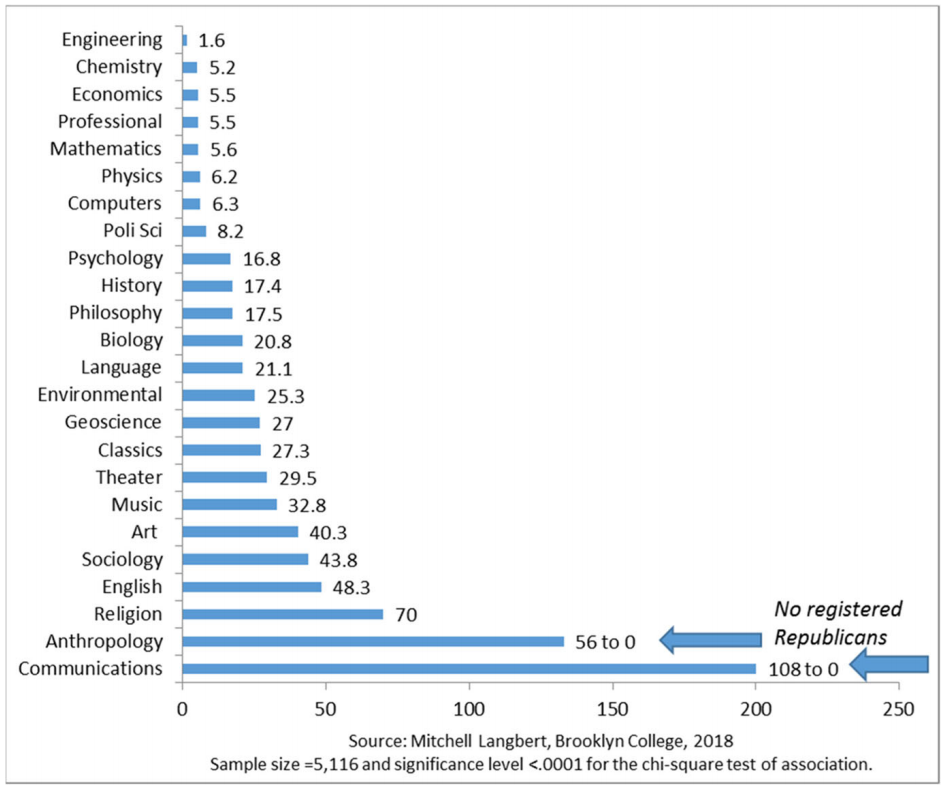
This imbalance affects:
- Cultural Narratives: Media consistently frames women as victims of systemic oppression while ignoring male suffering (e.g., higher suicide rates, workplace deaths, and educational decline).
- Policy Outcomes: Laws, like no-fault divorce, disproportionately harm children and men while being presented as progressive victories.
- Public Discourse: Any attempt to discuss gender imbalances that disadvantage men—such as dating market failures, custody laws, or male loneliness—is met with resistance, ridicule, or censorship. I firmly believe this point, is plain evil.
The Algorithmic Distortion of Reality
Social media algorithms amplify content that is outrage-inducing, sensational, or divisive. In the context of gender dynamics:
- Hyper-feminine empowerment slogans (e.g., Men ain’t shit, The Man or the Bear etc…) trend easily but ignore systemic issues affecting men.
- Male spaces or concerns are dismissed or labelled toxic, reinforcing a culture where men’s struggles remain invisible.
- Beauty filters, body positivity campaigns, and curated online personas perpetuate unrealistic standards for both men and women, creating dissatisfaction with reality.
Until we recognise how modern tools distort biological instincts, cultural norms, and emotional well-being, the gender divide will only widen. Men and women will continue to face loneliness, distrust, and resentment—not because of who they are but because of the systems exploiting them.
Gynocentrism in Policy and Culture
When Equality Becomes a Game of Power
In a gynocentric political climate, policies and cultural narratives often prioritize women's interests—sometimes at the literal expense of men. This creates an ironic situation: while women call for equality, they sometimes weaponize it in status games against each other. As a result, some of the most unequal systems in society are created for or by women.
At its core, Gynocentrism in policy and culture often manifests in ways that uphold women’s interests, but this well-meaning intent sometimes leads to harmful outcomes for both genders.
Consider:
- Courts overwhelmingly favour women in custody and divorce cases, which perpetuates alienation of fathers which makes fathering an even more difficult and unattractive pill to swallow. This also patently increases poor attachment, which is carried through into every relationship that person will ever have.
- Beauty and fashion industries thrive by exploiting and manipulating impressionable women by actively perpetuating unattainable standards. Systemic abuse.
- Dating apps amplify hypergamous dynamics, where a tiny percentage of men monopolise the attention of most women. Then, average women have to face worse conditions on the dating market as dark triad traits (Machiavellianism, Narcissism, Psychopathy) cannot be selected against. Think about it like this: male psychopaths exist in a predatory niche for naïve young women who can't accurately identify competent male traits, they exploit that misidentification.
- Body positivity campaigns uplift obese women while obese men remain punching bags for ridicule. Again, another status game, yes queen you look good, is code for, she's no longer a threat.
- Domestic violence support almost exclusively targets women, despite evidence that men face comparable rates of abuse but receive a fraction of the resources.
- Campaigns like The Future is Female ignore the societal collapse affecting us. While women excel in education and careers, these slogans overlook a rising mental health crises, declining workforce participation, soaring suicide rates, and worsening educational outcomes among men. What masquerades as a call to empowerment becomes, in practice, a blind, tone-deaf mantra that props up a one-sided narrative, and willfully disregards the devastating fallout of gender imbalances.
The Hidden Cost of Gynocentrism
The disparity in these systems often goes unnoticed because the narrative primarily focuses on women's oppression, while male suffering is ignored or downplayed. This imbalance distorts our understanding of “equality” and weakens our grasp of how societal structures impact both genders. Until both sides are addressed with equal seriousness, true understanding and solutions will remain elusive.
Whether we examine no-fault divorce laws, dating app algorithms, or media narratives, it’s clear these changes weren’t spontaneous. They were deliberate choices—some made in good faith, others for control or profit—that disrupted millennia of social wisdom about love, trust, and maturity
By focusing solely on women’s issues, we fail to see the systemic disadvantages men face. In this skewed view of equality, one gender’s problems are amplified while the other’s are ignored.
The gendered dynamics of aggression are compounded by societal imbalances, where only certain forms of aggression are acknowledged and treated with seriousness.
The Lady doth protest too much me thinks - Queen Gertrude
Gendered Aggression
Toxic Masculinity vs. Toxic Femininity
The gendered dynamics of aggression are compounded by these societal imbalances, where only certain forms of aggression are acknowledged and treated with seriousness. Aggression reveals striking contrasts between the genders. Research consistently demonstrates that while men tend to express aggression physically, women excel in relational and covert forms of aggression, but that humans, man and women, are equally aggressive until you get to the extremes.
For instance:
- Men rely on direct confrontation, using physical dominance to settle disputes.
- Women master relational aggression, wielding gossip, social exclusion, and emotional manipulation as their weapons of choice.
Both forms of aggression can be equally destructive, yet society only acknowledges the physical kind. This leaves relational aggression unchecked, perpetuating the false narrative that men are inherently more dangerous while ignoring the emotional and social harm inflicted through women’s subtle methods.
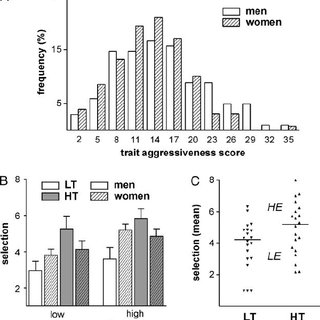
Aggression in both genders is largely similar until we reach the extremes, where men often fall into the category of hyper-aggressiveness.The scientific community has long understood these differences, yet modern narratives intentionally distort this knowledge. By hyper-focusing on toxic masculinity, society remains unwilling to confront or acknowledge toxic femininity. These invisible forms of aggression, though harder to detect, can cause just as much damage. If we aim for equality and mutual understanding, we must treat these realities with the same seriousness we apply to addressing male aggression.
The scientific community has long understood these differences, yet modern narratives intentionally distort this knowledge. By hyper-focusing on toxic masculinity, society remains unwilling to confront or even acknowledge toxic femininity. These invisible forms of aggression, though harder to detect, can cause just as much damage. If we truly aim for equality and mutual understanding, we must treat these realities with the same seriousness we apply to addressing male aggression.
At its core, male and female aggression operate on fundamentally different mechanisms. A simple yet effective way to frame this distinction is: men think conservatively, women think progressively, which means:
- Male aggression functions like a switch—instant, violent, and overtly antisocial when triggered. Society has established clear defences against this form of aggression: policing, laws, and deeply ingrained cultural taboos. Up until the switch is flipped, there is no feedback from men.
- Female aggression, on the other hand, resembles a slide—gradual, incremental, and relational. It manifests subtly through gossip, social exclusion, and emotional manipulation. Unlike male aggression, this form remains largely unchecked. Our institutional defences are non-existent, and our cultural defences have been systematically eroded, allowing relational aggression to persist undetected and unchallenged. Why do you think young women are so lost and medicated right now? Their community is a battleground, where acknowledging it gets you killed.
This imbalance explains why society cannot agree on contentious issues like abortion, domestic violence, or gender quotas.
At its core, many men perceive these debates for what they are: a slow, insidious ratchet mechanism—like a snake—that blames, shames, and gossips their autonomy into oblivion, slowly changing society one law at a time, without due discussion on the issues facing those very men. They can see its a one-sided conversation, any ground ceded is ground lost.
While male aggression is overt and easily condemned, female aggression operates through subtler channels. These dynamics frame men as the perennial aggressors, even as the relational forms of female-driven aggression evade accountability.
In essence, this allows the wayward maternal instinct to run rampant within these groups and institutions. Women, driven by an instinctual need to protect and nurture, select an infant—someone or something that can literally do no wrong (e.g. Palestine) —while simultaneously designating a predator, a figure for whom no level of suffering seems sufficient (e.g. Israel, or people like Andrew Tate and Donald Trump).
Until both sides of the equation are addressed with equal seriousness, true understanding, solutions, and even discussions, will remain elusive.
What scares me is that if we don't figure it out in the realm of the speech and dialogue, we figure it out in the realm of flesh - there are no alternatives to this.
Lessons From History
In addition to addressing modern issues, we can look back at historical examples where the pursuit of extreme equality led to chaos, providing a cautionary tale for our own time. The Ancient Greek playwright Aristophanes lampooned these dynamics long before our current gender debates in his play Assemblywomen, written in 391 BCE.

The satire follows Athenian women who, tired of male incompetence, disguise themselves as men to seize control of the government. They implement radical communal policies where private property and traditional relationships are abolished in favour of equality. Chaos ensues: absurd laws emerge, like requiring anyone who wants to sleep with an attractive person to first sleep with a less attractive one. Aristophanes’ play ridicules the societal consequences of misplaced maternal instincts and the folly of equality taken to the extreme. His message? When you ignore reality, you end up with absurdity.
You can avoid reality, but you cannot avoid the consequences of reality
- Ayn Rand
Checkout the podcast:
 Mac
Mac