Marxism - The Fight of Our Time
The intellectual battlegrounds of our generation and time in history.


Introduction
The Industrial Revolution replaced many of the societal braces we had against the worst in us. Rural farm life was quickly swapped for growing cities. The closeness of living, the replacement of community with competition, more capitalist thinking, and increased exposure to crime and exploitation all created a rift between members of a culture. This psycho-social wound is what Karl Marx developed Marxism to combat—a secular religion.
Marxism as a Secular Religion
In Christianity, the telos—ultimate purpose—is spiritual fulfillment, eternal life, and alignment with divine will. In Marxism, the telos is a utopian society achieved through material equality and the reorganization—equalization/destruction—of social structures. Promises of an equal and free classless society act as secular heaven, revolution becomes salvation, and the proletariat (working class) are the chosen people destined to deliver humanity from oppression.
This framing didn’t come out of nowhere. Marx's early work wasn’t primarily about economics—it was about human nature, alienation, and the conditions of the human spirit under industrial capitalism. Before The Communist Manifesto, his focus was deeply philosophical. He built on Hegel’s dialectics, seeing history as a progression of human self-realization, but instead of spiritual fulfillment, he sought material liberation. This is why many argue that Marx was more a theologian than an economist—his work sought to explain suffering and provide a doctrine for salvation, but in purely material terms.
This shift—from understanding human alienation to constructing a system that claims to solve it—is where Marxism takes on religious qualities. It doesn’t just critique economics; it offers a moral framework, a grand narrative of history, and a path to redemption through struggle.
The Justification of Means
In this worldview, the ideal end result justifies any means, because the material transformation of society is considered the ultimate goal - not the transformation of individuals souls. This perspective has led to horrific outcomes in history, where the pursuit of a "perfect" society, such as the Marxist ideal of a classless utopia, has been used to justify extreme measures, including mass executions and genocides. The ends do justify the means to them. They're only ever one murder away from the utopia, essentially.
Historical Consequences of Marxist Ideology
In this context, Marxism can become a dangerous ideology, where the means—revolutionary violence—are seen as acceptable because they are believed to serve the higher end of social equality and liberation. This tendency to disregard ethical limits in pursuit of a material goal is what makes Marxism, when taken to logical conclusions, the single most lethal ideology humans have ever created. More lethal than every religion humans have ever created (every holy war, crusade, jihad etc...), combined - in just 100 years.
Russian Revolution & Civil War (1917-1922): ~8–12 million dead.
Soviet Union under Stalin (1924-1953):
Holodomor, Ukraine (1932-33): ~3.5–7 million dead.
Great Purge & Gulags (1930s-50s): ~1–2 million executed; millions more perished in forced labour camps.
Forced Deportations (1930s-40s): ~1–2 million dead (Crimean Tatars, Chechens, and others).
Communist China (1949-Present):
Great Leap Forward (1958-62): ~15–45 million dead.
Cultural Revolution (1966-76): ~1–3 million dead (violence, persecution, starvation).
Tibet (1950-Present): ~500,000 dead (occupation, famine, persecution).
Khmer Rouge Regime, Cambodia (1975-79): ~1.5–2 million dead.
North Korean Famines (1990s): ~240,000–3.5 million dead.
Red Terror, Ethiopia (1977-78): ~500,000–1 million dead.
Post-War Purges, Vietnam (1950-80s): ~50,000–200,000 executed; tens of thousands more perished in re-education camps.
From 1917 to 2025, in just 108 years, Marxist regimes have been responsible for between 40 and 120 million deaths.
If your death toll estimates have a margin of error in the tens of millions, do you really even care?
How Marxism Gets into Culture
The Wolf in Sheep's Clothing
A man called Yuri Bezmenov, a former KGB agent and defector, once discussed ideological subversion tactics used by the Soviet Union—how they would attack a country from within so that it could be conquered cheaply. He describes a four-stage process by which they would weaken a society and culture:
- Demoralisation (15-20 years) – Educate an entire generation in Marxist ideology. Make the country immoral so they cannot believe truth when it is presented to them.
- Destabilisation (2-5 years) – Create conditions where tipping points can occur.
- Crisis (2-6 months) – Tipping points to seize power.
- Normalisation – Period of entrenchment where revolutionary changes become accepted as the new normal, and then the cycle repeats. A new normal—sound familiar?

"The Soviet ideological subversion program was so effective that by the 1950s and 1960s, the educational and cultural institutions in America were already heavily influenced by Marxist-Leninist ideas. This laid the groundwork for the counterculture movement, where young people—disillusioned with traditional values—were drawn to drugs, free love, and radical ideologies. They thought they were rebelling, but in reality, they were being manipulated to destabilize their own country."
Yuri Bezmenov
Bezmenov, like many Soviets, eventually became disgusted with this work when he understood its true nature, and defected despite a materially comfortable life.
But here’s where it gets deeper. Many think Marxism is about seizing power through outright revolution. But it doesn’t have to be. It can simply break things. Make systems inefficient. Waste resources. Condition people into frustration and dependence. You don’t need a total collapse—you just need people to scream for help, and who do they turn to? The government.
This is what makes subversion so dangerous. It’s not an external invasion; it’s a slow erosion of competence, trust, and order. And the best part for those who push it? It doesn’t even require them to govern well. It just requires enough destruction to make people accept anything as long as it feels like stability.
"To change the perception of reality of every American to such an extent that despite the abundance of information, no one is able to come to sensible conclusions in the interest of defending themselves, their families, their community, and their country."
Yuri Bezmenov
It’s worth noting the people the Soviets would connect with in these civilisations were refered to as useful idiots. We should talk about other western countries sometime…
Weaponizing Unsolvable Problems
One of the key strategies of ideological subversion is selecting crises that can never be truly solved. Traditional Marxism framed class struggle as a battle between the proletariat and the bourgeoisie, but modern leftist movements shifted the focus to race, gender, and climate change—issues that ensure permanent conflict and government intervention.
By framing these as existential threats, the left guarantees continuous justification for expanding power:
- Climate change demands global economic controls, endless taxation, and energy rationing, all justified by a crisis with ever-moving goalposts.
- Race and gender identity transform into permanent moral battlegrounds, where “equity” replaces equality, and new grievances emerge faster than old ones can be resolved.
- The enemy class is always shifting—capitalists, men, white people, conservatives—keeping the revolutionary cycle alive.
This approach ensures the state and its ideological enforcers remain in control. The left doesn’t want to solve these issues because solving them would remove their political leverage. Instead, they manufacture new crises to justify censorship, economic control, and expanded bureaucracy. If you look at the subversion timeline in the U.S its pretty horrifying.
The subversion timeline of the United States
Demoralization (1950s–1970s)
This phase is about eroding belief in a nation’s values—turning its people against themselves and each other.
1950s–1960s: The U.S. begins shifting from a nation built on self-reliance and national pride to one wracked with guilt and internal division.
The Cold War paranoia deepens, and trust in government institutions fractures.
The Civil Rights Movement is co-opted; what begins as a fight for equal rights is weaponized into perpetual racial conflict.
The counterculture movement glorifies degeneracy, pushing Marxist ideals through academia and entertainment.
Vietnam War protests radicalize young Americans, making anti-Americanism fashionable.
1970s: The erosion accelerates.
Watergate shatters faith in government.
The education system fully embraces moral relativism—teaching that all ideas and cultures are equal (except for [insert western country here], which is inherently evil).
Hollywood and media push nihilism, drug culture, and hedonism, while the sexual revolution further fractures the traditional family unit.
Result: A generation raised to despise its own country, ripe for further destabilization.
Destabilization (1980s–1990s)
Once national identity is weakened, the next step is economic and political chaos.
1980s: The Reagan years provide temporary resistance, but subversion continues underground.
The AIDS crisis fuels further division, pushing the idea that America is failing its own people.
Race relations are intentionally worsened through media narratives.
Mass outsourcing begins, hollowing out the American working class, a deliberate move to weaken the nation’s industrial base (its ability to defend itself).
1990s: The push toward globalization accelerates U.S. decline.
NAFTA is signed, gutting domestic industry.
The culture war expands, with identity politics replacing national unity.
Media consolidates under fewer and fewer corporate owners, ensuring ideological control over the population.
Result: A divided and increasingly dependent population, vulnerable to crisis.
Crisis (2000s–2016)
Now the system is primed for collapse. Crisis is used to justify sweeping, irreversible changes.
2000s: The War on Terror provides an excuse to erode freedoms.
9/11 leads to mass surveillance, Patriot Act, and endless foreign wars.
The Middle East conflicts drain resources and create a generation of war-weary Americans.
The 2008 financial collapse obliterates trust in banks and government.
2010s: The final push toward authoritarianism begins.
Occupy Wall Street (Marxist movement) is crushed, but its ideology infects the mainstream.
Identity politics become dominant, creating irreconcilable divisions between Americans.
The Obama years see unprecedented government overreach and the rise of Big Tech as the new ruling class.
The deep state begins directly interfering in elections, culminating in 2016.
Result: The U.S. stands on the edge of internal collapse, primed for the final phase.
Normalization (2016–2024)
Under a controlled collapse, the ruling class solidifies power, normalizing authoritarianism as the new status quo.
2016: Donald Trump is elected, derailing the Marxist timeline.
The entire establishment (media, intelligence agencies, and global elites) goes to war against him.
Russiagate is fabricated, proving the intelligence agencies are fully compromised.
2020: The COVID-19 pandemic is used to justify mass government control.
Lockdowns wreck small businesses while enriching global corporations. While operating digitally, further oppression and control was seen in the new online town squares:
Election integrity is shattered as some states now don't require voter ID, mass mail-in voting is normalized.
The deep state regains control through Biden’s regime, immediately undoing nationalist policies.
2021–2023: The U.S. hurtles toward the brink.
Inflation skyrockets, weakening the dollar.
With weak leadership, opportunity presents itself and the world ignites, the War in Ukraine is provoked, draining U.S. resources while strengthening China and launching Russia into a war economy. Hamas launch their attack on October 7th further deepening the crisis. There are now two geopolitical fronts.
Censorship reaches unprecedented levels, with social media acting as government enforcers.
The Trump Counter-Offensive (2024–Present)
Then, the unexpected happened. A total electoral landslide shattered the Marxist grip on power.
- Trump wins by historic margins, proving that the subversion has been fully exposed.
- The Republican sweep wipes out Democrat control at every level. There is literally no defence publicly - it is that obvious.
- Trump purges the deep state, deploying the new untouchable DOGE, DOJ and intelligence assets against its own entrenched operatives.
- DEI and other Marxist elements are gutted from culture, two genders reappear (lmao), USAID (mechanism for funding Marxist protest and cultural pushes) is globally exposed.
- The dollar’s future remains uncertain—debt and global realignment could still collapse the system.
- Civil war remains a possibility, as deep-state actors could attempt a desperate last move.
What happens next? That depends on how much rot remains in the system—and how far the elites will go to maintain control.
Late-Stage Capitalism
The term "late-stage capitalism" is often used by Marxists (and left-leaning critics) to describe what they see as capitalism's excesses, contradictions, and eventual decline. The irony, though, is that many of the issues they criticize—corporate monopolies, crony capitalism, government bailouts, inflation, and wealth inequality—are certainly worsened by interventionist policies that stray from pure free-market capitalism.
In that sense, you could argue that the term is used as a kind of gaslighting tactic—blaming capitalism for problems that are, at least in part, caused by the very state interventions, regulations, and socialist policies that distort free markets. Instead of acknowledging these distortions, critics claim that capitalism is inherently flawed and doomed to collapse under its own contradictions.
It’s a classic rhetorical move: create conditions that hinder capitalism, then point to the results as proof that capitalism is failing.
The Marxist Effect on Marriage Rates and Family Stability
One of the clearest signs of Marxism’s influence on dating and relationships is the dramatic decline in marriage rates. Traditional marriage, once seen as a pillar of societal stability, has been reframed as an outdated, oppressive institution. This shift stems from the Marxist critique of the family as a mechanism of control, particularly through Friedrich Engels’ The Origin of the Family, Private Property, and the State. Engels argued that marriage, especially under capitalism, was an economic arrangement designed to benefit men and sustain class structures.
Historically, the core function of marriage was not just the partnership between spouses but the stable upbringing of children. The family unit provided structure, attachment, and discipline—ensuring that future generations were well-adjusted and capable of functioning in society. But as Marxist thought permeated cultural institutions, marriage was increasingly portrayed as restrictive rather than stabilizing. The feminist movements of the 20th century, influenced by Marxist critiques of patriarchy, emphasized independence over partnership, discouraging women from seeing marriage as a desirable or necessary foundation for raising children.
At the same time, de-industrialization and economic restructuring dismantled the traditional social line-up that facilitated attraction between the sexes. Manufacturing and trade work—fields that historically allowed average men to earn respectable wages and support families—were gutted, while policies and cultural shifts aggressively pushed women into higher-status career paths, such as corporate and academic positions, rather than anything outside, or essential trades like plumbing or bricklaying for instance. This economic shift served a key function: breaking hypergamy.
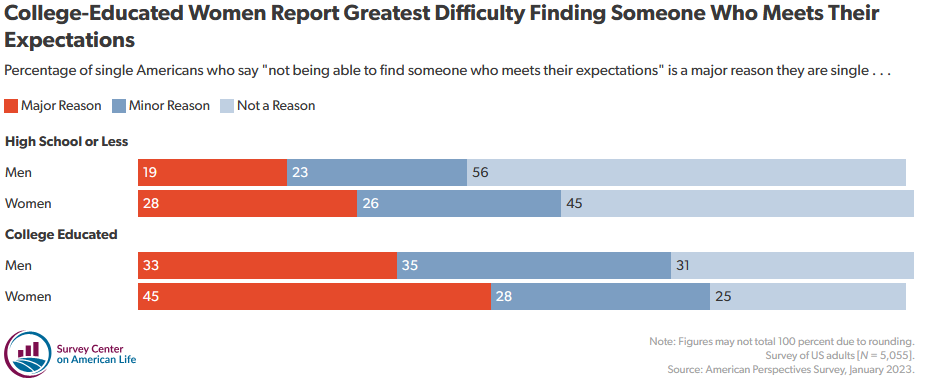
I've written about hypergamy before, but its the tendency for women to seek partners of equal or higher status—was a natural stabilizing force when men had secure career trajectories. But by eliminating traditional male-dominated career pathways and pushing women into high-status roles, the dating market was thrown into chaos. Women earning higher salaries became less willing to "date down," while many men, stripped of their economic utility, dropped out of the dating and marriage pool entirely. The result? A growing divide between the sexes, declining marriage rates, and increased reliance on short-term relationships over long-term commitment.
Compounding this issue, the rise of no-fault divorce, welfare programs that made fathers economically replaceable, and cultural shifts that rejected traditional gender roles all contributed to the explosion of single parenthood. But this shift came at a cost. Children raised in single-parent households are statistically more likely to experience attachment disorders, engage in substance abuse, become sexually active earlier, and turn to crime. Without the structure of a two-parent home, many struggle to develop the discipline and emotional security that a stable family provides.
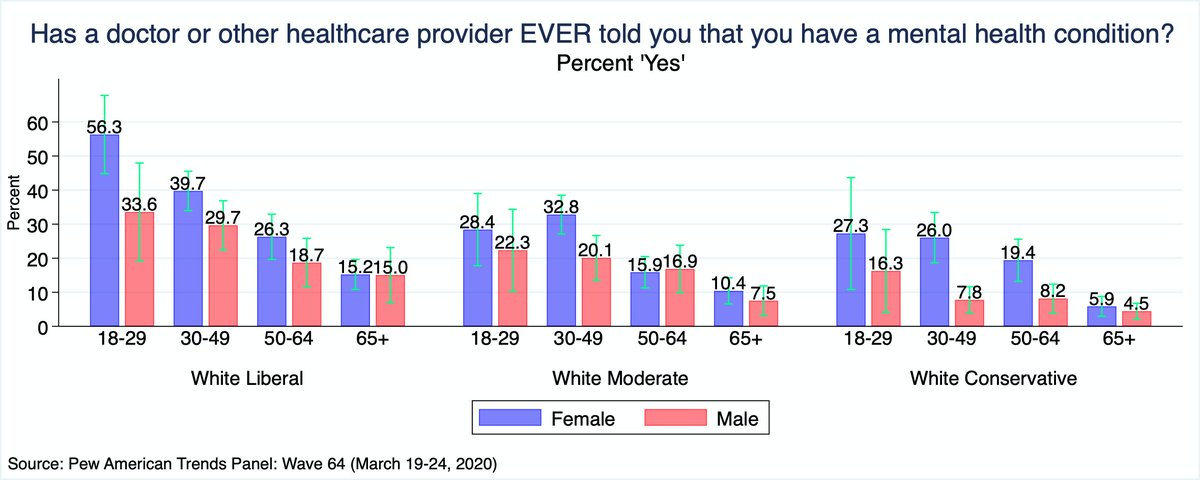
What’s the result? A dating pool that will continue to get worse until a birth rate collapse, a societal regression toward the first stage of human mating patterns—polygamy. When stable monogamy is deprioritized, men and women fall back into short-term mating strategies, leading to increased promiscuity, weaker family bonds, and greater reliance on the state as a surrogate provider. This aligns perfectly with a Marxist strategy—not through direct destruction, but by making institutions so inefficient and undesirable that people abandon them willingly. Just as Marxism seeks to destabilize economies to necessitate government intervention, it has weakened marriage and family structures, creating a crisis where the state increasingly takes the place of the traditional family unit. See Below:
Over 50% Of Liberal, White Women Under 30 Have A Mental Health Issue. Are We Worried Yet?
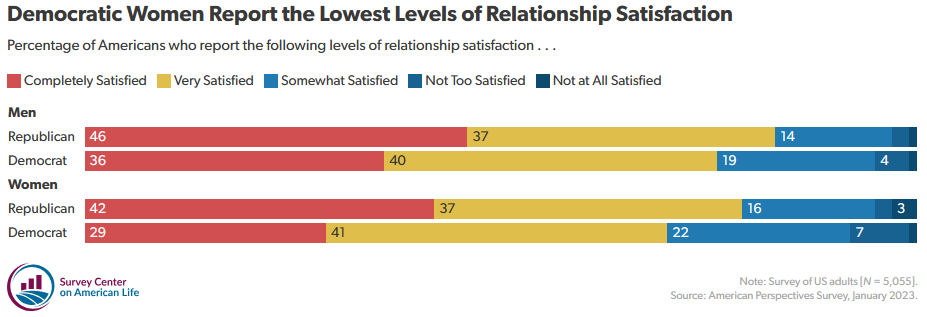
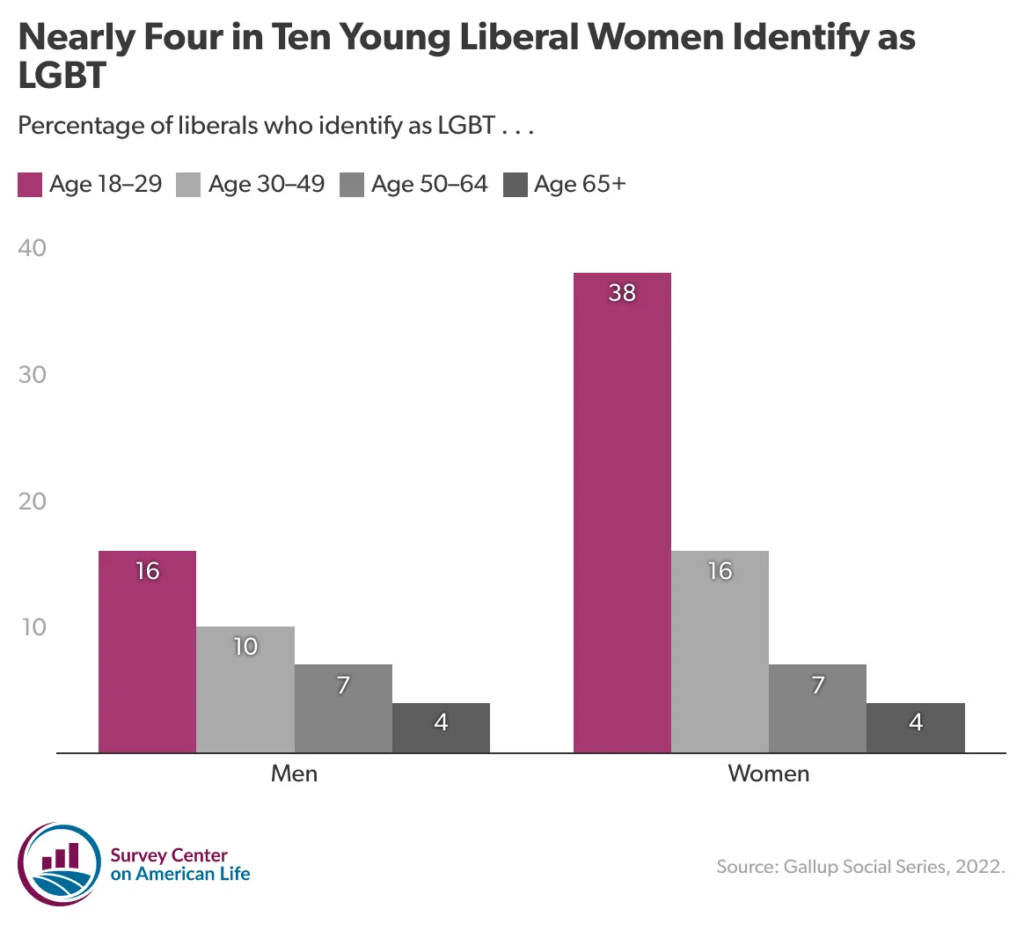
Marxist Infiltration: Roots and Realities
Unburdened by what has been
A defining feature of Marxist revolutions has been their reliance on youth, particularly young women, as agents of change. The Red Guards during China's Cultural Revolution (1966–1976) exemplify this dynamic. Mao Zedong mobilized millions of young people to dismantle "old ideas, old culture, old customs, and old habits." Among these, young women became some of the most fervent revolutionaries, driven by promises of equality and liberation from traditional roles. However, this liberation often came at a steep cost, as it replaced one form of oppression with another, erasing individual agency in favour of ideological conformity.
Enter the Globalists
And conformity is precisely what global institutions like the WEF thrive on—discouraging ownership, self-sufficiency, and independence in favour of managed populations.
Take a look at this World Economic Forum advertisement, it was scrubbed from social media sites.
You’ll own nothing, and you’ll be happy, living in pods, and eating bugs:
An interesting post on the WEF website: 5 reasons why eating insects could reduce climate change
Colonize the colonizers
Modern movements like radical feminism and gender equity initiatives bear striking similarities to Mao’s Cultural Revolution. Just as the Red Guards were encouraged to destroy cultural artifacts and traditions in the name of progress, contemporary activists are often incentivized to dismantle traditional gender roles and institutions. Terms like "toxic masculinity" and "patriarchy" serve as rallying cries, framing men and traditional family structures as obstacles to progress. Drawing on James Lindsay’s critique of Critical Social Justice, this approach reflects an application of "applied postmodernism," which reinterprets social interactions through lenses of power and oppression. Lindsay argues that the woke movement, much like historical colonizers, sees itself as a force of cultural imposition, spreading its values as if planting flags in every institution and aspect of society. Concepts like hegemonic masculinity are employed to position traditional male roles as inherently oppressive, stripping them of context and nuance.
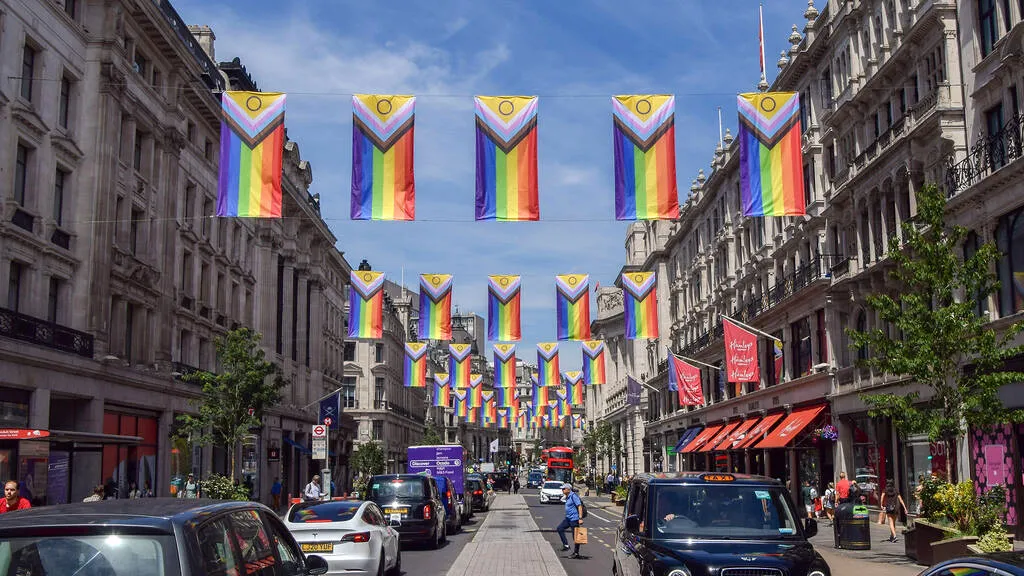

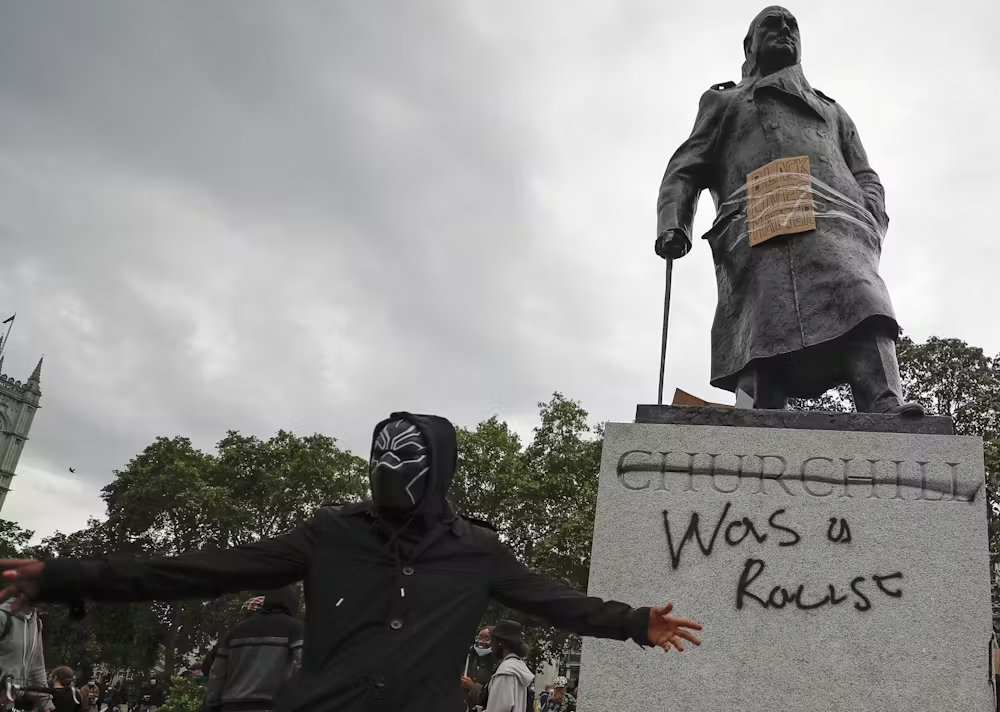

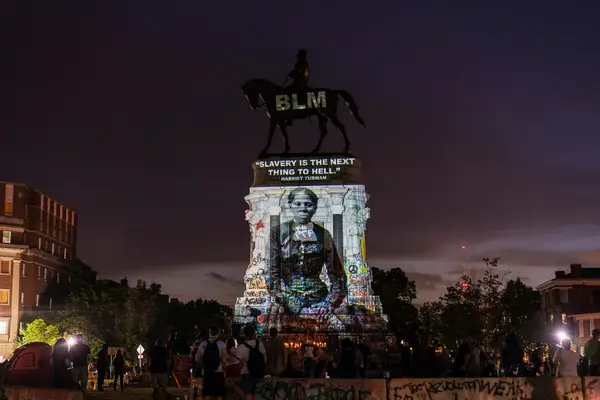
This historical pattern persists today. Young women are often the most vocal advocates for progressive movements aligned with Marxist ideals. This is not coincidental; movements aiming to reshape societal norms frequently appeal to those who feel disenfranchised by existing structures. Women, historically excluded from certain forms of power, find in these movements both a voice and a sense of purpose (especially the women least able to leverage sexual attraction on the dating market).
Weaponized Maternal Instincts
But there’s a deeper, psychological element at play here—one that explains why these movements have such a powerful emotional grip. As communities and family structures decay under subversion, social bonds weaken, and people become more isolated. Women, particularly those who do not marry or start families, still retain their maternal instincts—but without a natural outlet, these instincts become misdirected. Instead of nurturing children and building stable communities, they channel these instincts into ideological crusades.
This creates an extremely dangerous dynamic. The maternal impulse to protect the innocent is weaponized, with new ideological frameworks defining "innocence" and "predation" in a way that serves the movement’s agenda. Instead of mothers defending their children against tangible threats, the "child" becomes an abstract cause—the marginalized, the oppressed, the "newborn" who can do no wrong. The enemy, then, is a perceived predator: men, conservatives, traditionalists, or anyone who represents resistance to the movement’s goals. The more this predator is demonized, the more righteous the battle becomes, and—critically—there is no limit to the amount of punishment this enemy is seen to deserve.
This mechanism is evident in modern cancel culture, political purges, and social justice crusades. The punishment is not proportional to the offense—rather, it is fuelled by an insatiable moral fervour. The same instinct that, in a stable society, would drive a mother to protect her child from a dangerous predator now manifests as a relentless pursuit of ideological enemies, who are dehumanized and subjected to public shaming, career destruction, or even physical attacks.
"It was always the women, and above all the young ones, who were the most bigoted adherents of the Party, the swallowers of slogans, the amateur spies and nosers-out of unorthodoxy."
1984 - George Orwell
This also explains why modern leftist movements, particularly those infused with Marxist principles, attract disproportionately high numbers of women. Not only do these movements provide a sense of moral purpose, but they also offer a substitute for the fulfillment that traditional family structures once provided. This is why feminism often oscillates between “empowering” women to reject marriage and children while simultaneously promoting extreme emotional reactions to perceived oppression. The result is a cycle of perpetual discontent—women are taught to hate the structures that would bring them fulfillment while simultaneously seeking purpose in ideological movements that thrive on conflict. Fewer stable families, more transient relationships, and a society where people are less independent and more plugged into the system. This is by design—when people don’t own homes, land, or businesses, they become renters in every sense of the word, not just financially but ideologically. Private property is the basis of a free society.
Thus, Marxism doesn’t just infiltrate institutions—it hijacks human nature. By weaponizing maternal instincts and the need for belonging, it turns people into activists who dismantle their own stability. Once those foundations are gone, they are left more dependent than ever—on the state, on ideology, on movements that demand their loyalty in exchange for fleeting validation. And what better way to ensure compliance than by convincing people they will own nothing and be happy?
It’s no coincidence that young far-left women are the most medicated group in the West. Isolated, anxious, and searching for meaning, they make perfect foot soldiers. A dependent population doesn’t resist. They don’t question, they don’t build, and most importantly—they don’t threaten the interests of those who seek to control them.
The point at which cultures can no longer defend themselves
The Scandinavian Distopia
Some of the nations once seen as the poster children for progressive, Marxist-influenced policies—like Sweden—are now confronting a troubling reality. Sweden, long hailed as a model of equality, social welfare, and progressive values, has recently faced stark challenges that belie its image as a utopia of social justice. The country’s rate of reported sexual violence, for instance, has placed it at the top of global comparisons in terms of per capita rape cases, earning it the label of the “rape capital of the world” in certain discussions. However, it’s crucial to note that Sweden’s high rape statistics are largely a result of its broad legal definition of rape, which encompasses a range of sexual crimes not considered as rape in other countries. In addition, Sweden's progressive stance encourages victims to report such crimes more openly, resulting in higher visibility of these incidents. Nevertheless, this uptick in reports should not be ignored; it correlates with a wider trend of social disintegration that has come with the erosion of traditional structures. As the family and community bonds have weakened, the sense of individual autonomy and societal security has crumbled. Sweden’s struggles with rising crime rates, including grenade attacks and organized gang violence, further reflect the deep fractures caused by a misguided attempt to remake society. While these issues are multifaceted, they show how even the best-intended social policies, when pushed to extremes, can lead to the unraveling of the very fabric they sought to strengthen.
God Save the King
Some of the nations once seen as the strongest bastions of Western civilization—like the United Kingdom—are now teetering on the edge of collapse. Britain, a country that once prided itself on law and order, justice, and national resilience, has become a nation where terrorists roam free, gang violence is rampant, and ordinary citizens are left defenseless by a government that has abandoned them.
Once the beating heart of an empire that spanned the globe, the UK now stands as a cautionary tale: a country so ideologically shackled that it refuses to protect its own people from acid attacks, knife crime, terror cells, and the outright collapse of public safety.
The UK has suffered more terrorist attacks than any other country in Western Europe in the last two decades. From the 7/7 bombings, to the Manchester Arena bombing, to the London Bridge stabbings, to the most recent bloodbath at a dance studio, the pattern is clear:
The British government does not care about stopping terrorism.
This is a country where known extremists—people on government watchlists, individuals who have literally pledged allegiance to ISIS—are allowed to roam free while law-abiding citizens are harassed by police for “hate speech.”
The two-tier policing system ensures that radical Islamist hate preachers can gather in public squares and call for the destruction of the West, but if a British citizen dares to protest this openly, they are arrested for “breaching the peace.”
The British people are done. They should probably be arming.
Conclusion: The Cost of Marxism and Cultural Subversion
The destruction of traditional norms without offering viable alternatives creates a dangerous void, nature abhores a vaccuum and where evil can grow - it inevitably does, leaving individuals lost and disoriented. In the realm of relationships, this manifests as growing mistrust between genders, a breakdown of stable partnerships, and a profound rise in loneliness and dissatisfaction. The absence of stable foundations for human connection and social cohesion breeds chaos and despair. Marxism, at its core, is a force of all-consuming disorder—a cancer on the social body.
The Western world cannot afford to continue tolerating or promoting Marxist ideologies. If we reject Nazism and Fascism as dangerous, harmful ideologies, why should we allow Marxism the same platform? Why do we allow it to be taught at universities? If anyone continues to champion these ideas today, they either fail to understand their historical consequences and that they’re being manipulated, or worse, actively seek to undermine the very fabric of Western civilization.
In the face of this cultural subversion, we must heed the warning of Yuri Bezmenov, who identified religion as the ultimate defense against ideological decay. In times of crisis, faith and a commitment to higher principles can preserve our integrity and guide us through the chaos. As Bezmenov said, “you can suffer eternally for the right cause.” It is time to restore our values, rebuild our families, and reclaim the principles that have sustained the West for generations. Otherwise, we risk succumbing to the very forces that seek to dismantle everything we hold dear.
At the core of this new totalitarianism is what political theorist Sheldon Wolin coined inverted totalitarianism. Unlike traditional forms of totalitarianism, where the state seeks total control over all aspects of life through overt power, inverted totalitarianism operates through the corporate state, where economic elites and bureaucratic institutions hold ultimate power. The masses are lulled into complacency, not by direct repression, but by a seductive sense of freedom and consumerism, which in reality serves to disempower them further. The state doesn’t need to use force when it can manipulate and gradually erode autonomy through systemic control.
The destruction of Western values, through inverted totalitarianism, isn’t just an external collapse—it is a deep moral erosion. As history has shown, ideologies that strip away human dignity and connection with transcendent values ultimately lead to chaos. Research, such as the famous shock experiments conducted by Stanley Milgram, found that those with a strong sense of faith or connection to higher moral principles were far more likely to resist inflicting harm. Those who believed in a higher authority or meaning beyond themselves were less willing to obey orders that would cause suffering.
In the face of today's ideological manipulation, the lessons of history are clear: the battle is not only political but moral. The West is not just facing a decline of traditional structures—it is engaged in a systematic process of self-destruction. In the end, the fight for freedom and human dignity is an internal one, as much as an external one.
“The line separating good and evil passes not through states, nor between classes, nor between political parties either - but right through every human heart.”
The Gulag Archipelago - Aleksandr Solzhenitsyn